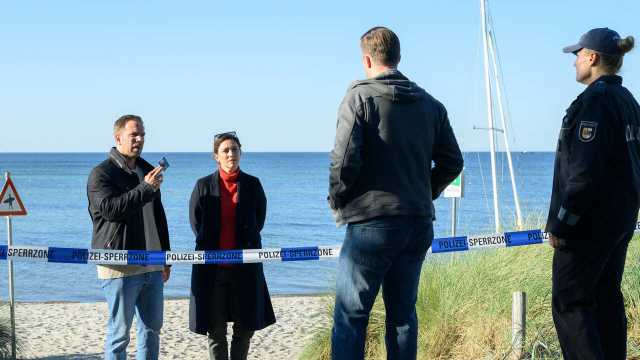
The picturesque, windswept beaches of Wismar, renowned for their serene beauty and as a haven for watersports enthusiasts, become the grim stage for a baffling murder in the compelling episode, Soko Wismar Kite In Den Tod. This particular installment of the beloved German crime series, SOKO Wismar, plunges viewers into a world where the thrill of kitesurfing collides with the darkness of human deception and deadly secrets. When a popular and seemingly blameless kitesurf instructor is found dead, the tight-knit community is shattered, and the SOKO team must peel back layers of a seemingly idyllic life to uncover a killer.
The title itself, "Kite in den Tod" (Kite to Death), hints at the central motif and the tragic irony of the victim's demise. Kitesurfing, a sport synonymous with freedom and exhilaration, is twisted into an instrument of fate, prompting an investigation that reveals the intricate web of personal ambitions, strained relationships, and hidden resentments lurking beneath the surface of Wismar's tranquil waters. This article delves deep into the heart of the mystery, exploring the victim, the suspects, and the powerful narrative that makes Soko Wismar Kite In Den Tod - Article 2 such a memorable episode.
The Tragic Discovery on Wismar's Shores
The episode opens with a chilling scene: at the break of dawn, the lifeless body of Henning Waslund washes ashore on Wismar's beach. Waslund was no ordinary citizen; he was an acclaimed and universally liked kitesurf instructor, a pillar of the local watersports community. His reputation suggested a man without enemies, making his violent end all the more perplexing. The initial shock gives way to a grim determination by the SOKO Wismar team to understand why someone would want to silence such a popular figure.
However, the idyllic setting quickly gives way to the grim realities of forensic investigation. Dr. Helene, the forensic pathologist, swiftly rules out an accident. The presence of defensive wounds on Waslund's body leaves no doubt that he fought for his life. Adding to the suspicion are the tell-tale signs on his equipment: the lines of his kite were incorrectly fastened. This crucial detail immediately dismisses any notion of a tragic kitesurfing mishap, pointing instead to deliberate foul play. Someone had tampered with his gear, likely as part of a struggle or to stage the scene. The question then shifts from "what happened?" to the far more complex "who did it, and why?" This meticulous attention to detail in the physical evidence is a hallmark of good detective work, demonstrating that often, the smallest inconsistencies can unravel a carefully constructed facade.
Unraveling Henning Waslund's Dual Life and Hidden Secrets
As the investigation into Henning Waslund's murder progresses, the SOKO team uncovers a surprising duality in his life that perhaps few in Wismar truly grasped. While his passion for kitesurfing and his role as a beloved instructor defined his public persona, Henning also held a demanding full-time position as a clerk in the container shipping industry. For the surfing season, he would reduce his office hours, dedicating his mornings to paperwork and his evenings to the exhilarating world of kitesurfing lessons. This balancing act, however, was not without its cracks.
A significant red flag emerges when investigators discover that on the very day of his murder, Henning failed to report for his office job, instead calling in sick. This deviation from his routine is highly suspicious. Why would a man who meticulously managed two careers suddenly abandon one, especially on the eve of his death? This detail immediately suggests hidden pressures, secret rendezvous, or perhaps a confrontation stemming from an aspect of his life he kept carefully compartmentalized. Was the "sickness" a cover for something illicit, a meeting with a person who ultimately became his killer? Or did it point to an undisclosed problem in either his professional or personal sphere that demanded his full, undivided attention?
This dual existence raises profound questions about identity, sacrifice, and the often-unseen struggles people endure to pursue their passions. Henning's dedication to kitesurfing, even at the cost of potential marital strain or professional compromises, paints a picture of a man driven by more than just income. It suggests a yearning for freedom, perhaps an escape from the mundane routines of his clerk job. The conflict between these two worlds, the rigid schedule of shipping and the boundless freedom of the sea, could have inadvertently created enemies or placed him in a precarious position. For the SOKO team, this "sick day" becomes a pivotal clue, leading them to re-evaluate every aspect of Henning's life beyond the image of the carefree kitesurf instructor. Understanding this complex balance is key to unlocking the true motive behind Soko Wismar Kite In Den Tod - Article 3.
Key Suspects and Their Compelling Motives in "Kite In Den Tod"
The murder of Henning Waslund quickly draws the SOKO team's attention to a small circle of individuals whose connections to him, while seemingly innocent on the surface, reveal deeper complexities and potential motives. Two primary suspects emerge, each with compelling reasons that could have driven them to a desperate act.
Bianca Faber: The Ambitious Prodigy
One of the first individuals to fall under suspicion is Bianca Faber, an ambitious and talented kitesurfing student. Bianca harbored dreams of becoming a professional athlete, a goal that exerted enormous pressure on her. She had been training with Henning, often receiving free lessons due to her friendship with his eldest son, Max. This arrangement, while seemingly generous, could also breed resentment or a sense of entitlement. The pressure to succeed in professional sports is immense, and any perceived setback or obstacle can push individuals to their breaking point. The narrative suggests that Henning had recently cancelled several training sessions, a decision that could have ignited a furious argument between them. Did Bianca, fueled by her fierce ambition and the fear of missing out on her dream, lash out at her mentor? Was the cancellation a mere inconvenience or a perceived act of sabotage that threatened to derail her entire future?
- Insight: The Burden of Ambition: Aspiring athletes often face immense psychological strain. The line between healthy competition and desperate measures can blur when dreams hang in the balance. When a mentor, who is also a gatekeeper to success, seems to withdraw support, the emotional fallout can be catastrophic.
Johanna Waslund: The Neglected Wife
Henning's family life, initially presented as stable, also shows significant cracks under scrutiny. His wife, Johanna Waslund, openly expresses feelings of neglect. Henning's unwavering dedication to kitesurfing, spending "every free minute" at the water, left Johanna frequently on her own, caring for their children. Such marital strain, often simmering beneath the surface, can boil over into bitter resentment. Johanna claims she was home with the children at the time of the murder, providing a seemingly airtight alibi. However, a crucial piece of the puzzle goes missing: their eldest son, Max, is suddenly nowhere to be found. His disappearance casts a long shadow of doubt, potentially undermining Johanna's alibi or suggesting a family secret far darker than mere neglect.
- Insight: Family Dynamics and Secrets: Crime dramas often highlight how domestic unhappiness can be a powerful motivator. A seemingly devoted spouse might harbor deep-seated anger, and the disappearance of a child can signify either complicity, protection, or the emergence of an entirely new victim or witness.
The interplay between these characters—Bianca's ambition, Johanna's neglect, and the mysterious absence of Max—creates a tangled web of potential motives. The SOKO team must carefully navigate these personal dramas, sifting through alibis and uncovering hidden truths to determine who had the strongest motive to silence Henning Waslund.
Beyond the Waves: The Psychological Thriller of SOKO Wismar
The episode Soko Wismar Kite In Den Tod is more than just a whodunit; it's a poignant psychological thriller set against the stunning backdrop of the Baltic Sea. The juxtaposition of the serene, exhilarating world of kitesurfing with the dark, complex undercurrents of human emotion is a powerful narrative device. The very element that brought Henning joy – the kite – becomes intrinsically linked to his tragic end, symbolizing how passions can sometimes lead us down unexpected and dangerous paths.
What makes SOKO Wismar, and this episode in particular, so engaging is its ability to delve into the human condition. It explores themes of ambition, the strain of dual lives, marital neglect, and the lengths to which individuals will go when their dreams or relationships are threatened. The meticulous police procedural work, from forensic analysis of the kite lines and defensive wounds to the psychological profiling of suspects, offers viewers a realistic glimpse into the challenges of solving complex crimes. It reminds us that often, the most ordinary people harbor the most extraordinary secrets.
- Practical Tip for Understanding Crime Dramas: When watching episodes like Kite In Den Tod, pay close attention to seemingly minor details. A character's sudden change in routine, a fleeting glance, or a seemingly insignificant object can often be the key clue that unlocks the entire mystery. Look beyond the obvious suspects and consider the underlying emotional drivers.
The series consistently excels at creating a sense of place, making Wismar itself a character. The sea, with its ever-changing moods, mirrors the turbulent emotions of the characters, adding depth and atmosphere to the unfolding drama. This episode serves as a powerful reminder that beneath the surface of any peaceful community, human desires and conflicts can brew into devastating consequences.
In conclusion, Soko Wismar Kite In Den Tod offers a gripping and emotionally charged murder mystery that challenges viewers to look beyond appearances. The tragic death of Henning Waslund, initially thought to be an accident, quickly unravels into a complex tale of hidden lives, strained relationships, and desperate ambitions. The SOKO Wismar team faces a formidable task, sifting through the layers of deception to uncover the true killer among those closest to the victim. This episode stands as a testament to the series' enduring appeal, combining compelling storytelling with intricate character development. For more insights into the investigation and its compelling twists, be sure to explore Soko Wismar Kite In Den Tod - Article 2 and Soko Wismar Kite In Den Tod - Article 3.